Visit the Crew on FacebookThe Flying Bones
The Dutch Fluytschip (Fluyt) currently known as the Flying Bones was first comissioned in 1595 by the Shipwrights of Hoorn in the Netherlands to secretly pay off an
outstanding debt of drinking, gambling, and prostitution. The vessel was designed to facilitate transoceanic delivery with the maximum of space and crew efficiency.
The design minimizes its armaments to maximize available cargo space, and uses block and tackle extensively to facilitate ship operations. Another advantage of its
pear-shape (when viewed from the fore or aft) is a shallow draft which allows this vessel to bring cargo in and out of ports and down rivers that other vessels cannot reach.
Weighing in at 240 tons and reaching 80 feet in length, this pear-shaped vessel has a large cargo bay near the waterline and a relatively narrow deck above. Hardwoods have
been used for the Keel, Kelson, Frames, Beams and Stringers while Pine softwoods have been used for the planking. The Flying Bones is square rigged with three masts that are
much higher than those of galleons to allow for greater speed. Four gun ports have been included so that light cannon could be deployed, and swivel guns are mounted at
strategic points above deck to clear invading parties.
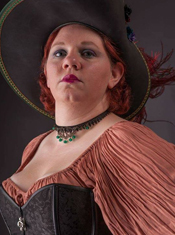
 Lady Bella Rose
Captain
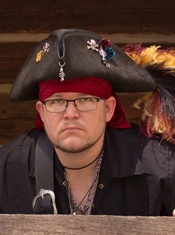 Lord Malcolme Mac Enri
Quartermaster
 Lady Cornelia Caeciliana
First Mate
 Lord Merovechus de Blariaco
Boatswain
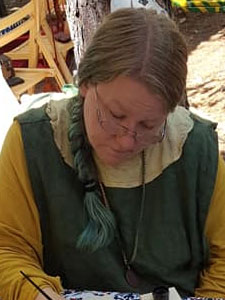 Lady Cyneswith the Quiet
Sailing Master
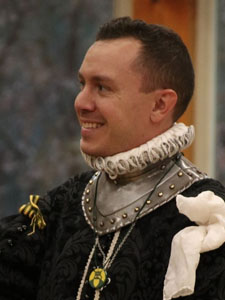 Don Julien de la Fontaine
Master Gunner
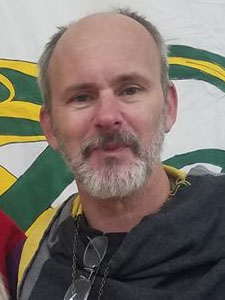 Master Draco of Brockore
Royal Liaison
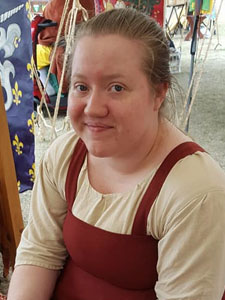 Kaitlyn Piper
Able Bodied Sailor
Jackie RoseAble Bodied Sailor